
See how Elemental Concept's customer research helped guide the development of Zoom Trolley, Foodstuffs innovative supermarket shopping experience.
The client
Foodstuffs, New Zealand’s largest grocery distributor, operating the PAK’nSAVE, New World and Four Square brands.
Opportunity
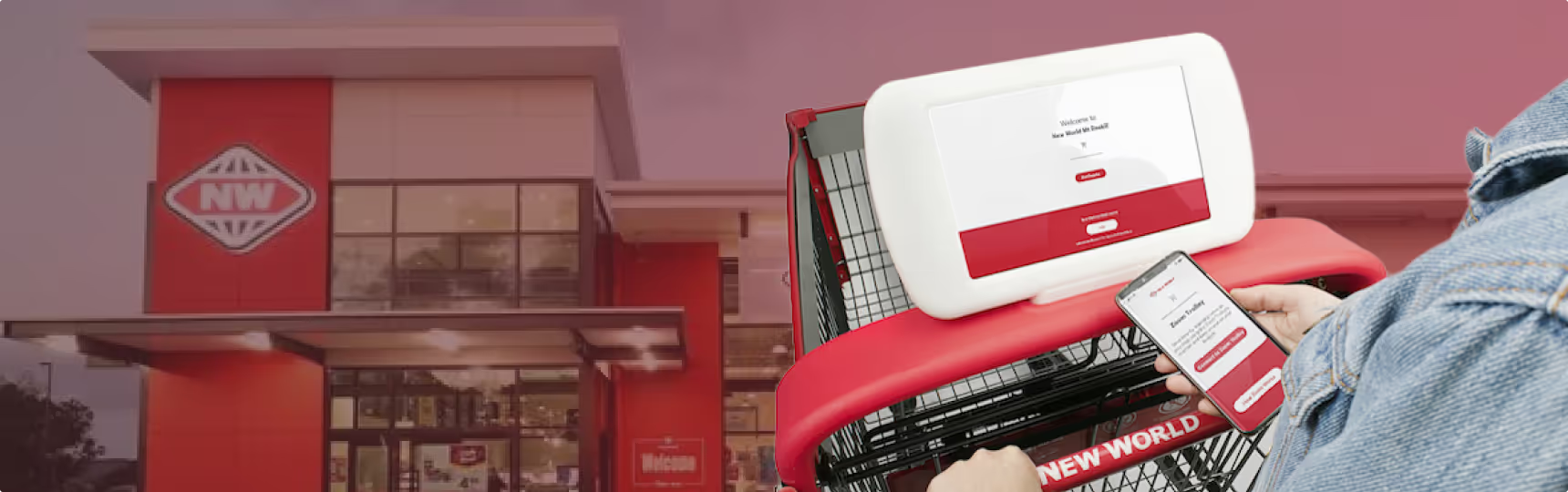
New World had built Zoom Trolley, a smart trolley with an integrated app, screen and barcode scanner that let customers scan items as they went, then check out without unloading. The technology worked. What Foodstuffs did not yet know was whether it would earn a place in a habit as established as the weekly grocery shop, where customers have little tolerance for anything that adds friction rather than removing it. Before scaling the rollout, the business needed to know what would actually make someone choose Zoom Trolley over the trolley they already knew, and what had to be true operationally for stores to support it.
Approach
A new way of shopping only succeeds if the pull towards it is strong enough to outweigh the effort of learning something new, so the real question was never whether Zoom Trolley worked, it was whether customers had enough reason to switch.
We ran three rounds of research, each feeding directly into the next round of design changes. The first round looked at the experience from the inside, through interviews and shop-alongs with Foodstuffs staff, to understand what the trolley demanded operationally before asking customers to use it. The second round put it in front of customers directly: mock shops at two New World stores, observed start to finish, with one to one interviews before and after, surfacing friction points around the interface, security and privacy, ergonomics and store operations that customers often could not name outright but visibly struggled with. The third round tested the redesigned experience against four distinct stages (registering through the app, pairing phone to trolley, shopping with it, and checking out) with interviews and follow up surveys at each stage to see whether the changes had actually closed the gaps the second round found.
Outcomes
By the third round, a clear pattern had emerged. Customers believed in Zoom Trolley’s speed and efficiency, and the ability to pay and exit without staff intervention created a genuine sense of control and empowerment, strong enough to outweigh the extra thought and effort first time use required. That gave Foodstuffs a defensible basis for continuing rather than a hopeful one. The executive team endorsed moving into in-store pilots, backed by prioritised recommendations for the digital and physical experience, product validation across a wide range of customers and operational staff, and a phased experience model to guide the rollout.