
Designing a digital experience for heavy machine operators in a hazardous, high pressure environment
The client
Loadrite, maker of the physical scales and interface hardware built into wheel loaders, excavators and other heavy machinery, used to weigh bucket loads on site.
Opportunity
Loadrite was replacing its ageing hardware with a new Android based system, which meant redesigning the interface from the ground up. The obvious brief was to make the new interface easier to use than the old one. The harder, more specific problem was buried in how operators actually worked: many of them moved between different machines and tasks through a shift, and had to relearn the scales interface every time they came back to a wheel loader, which meant experienced operators were constantly stopping to re-teach it to others. Solving that meant understanding the actual pattern of use, not just refreshing the visual design.
Approach
The interface had to work for hands that were wet or muddy, in an environment with real physical hazards and constant time pressure, so simplicity was not a nice to have, it was a necessity for safety and accuracy.
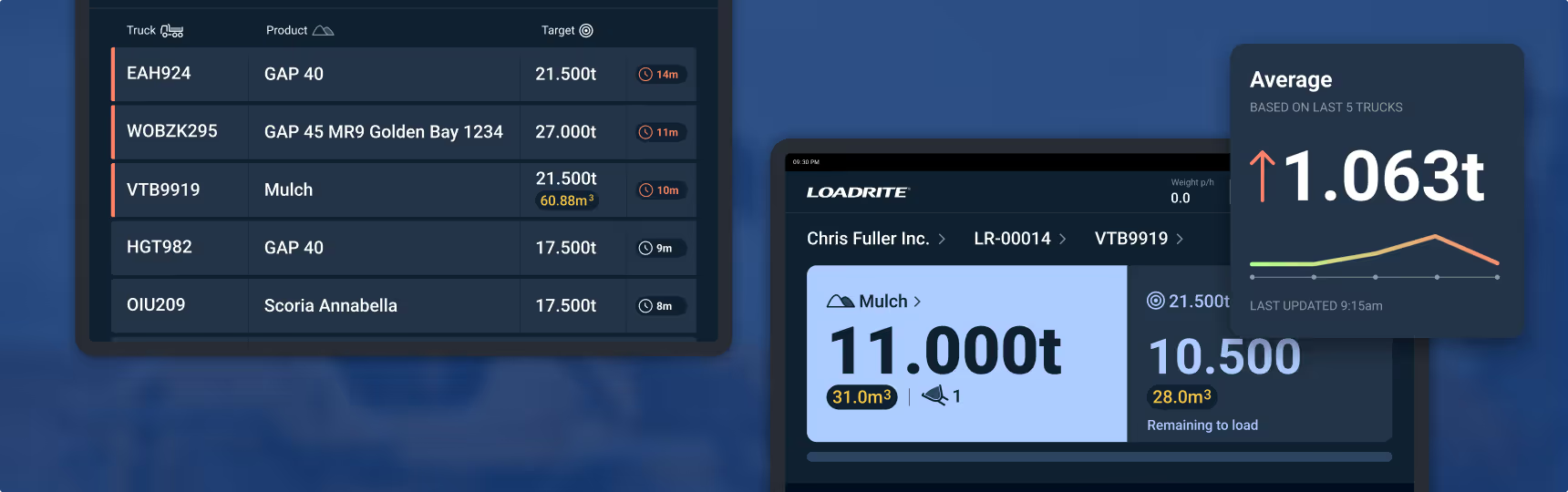
We ran research on site at local quarries and remotely with Loadrite’s international customers, to understand where operators actually got stuck rather than where we assumed they would. That research surfaced the re-learning problem directly, along with the user flow operators expected and the specific improvements they wanted to see. We then worked closely with a wheel loader operator as a subject matter expert to take concepts into detailed design, testing on site and internationally as we went. The designs simplified workflows for new and experienced operators alike, grouped content and made actions contextual so the right option was easy to find, and used colour deliberately to reinforce what the operator needed to do next. Loadrite’s development team then built our designs into the Android application, piloted it across several quarries and construction sites, before rolling it out globally.
Outcomes
Loadrite ended up with an interface that actually reduced training time and made the job easier in a genuinely hazardous, high pressure environment, while still meeting the waste reduction and legal weight compliance goals that started the project. The clearest signal of whether the redesign actually worked was not a survey score, it was that operators started arguing over who got to use the machines with the new app installed. Loadrite also came away with an extensible design framework it can carry into other machine types, and firsthand evidence, as its first engagement with external UX specialists, that human centred design was worth doing again.